





















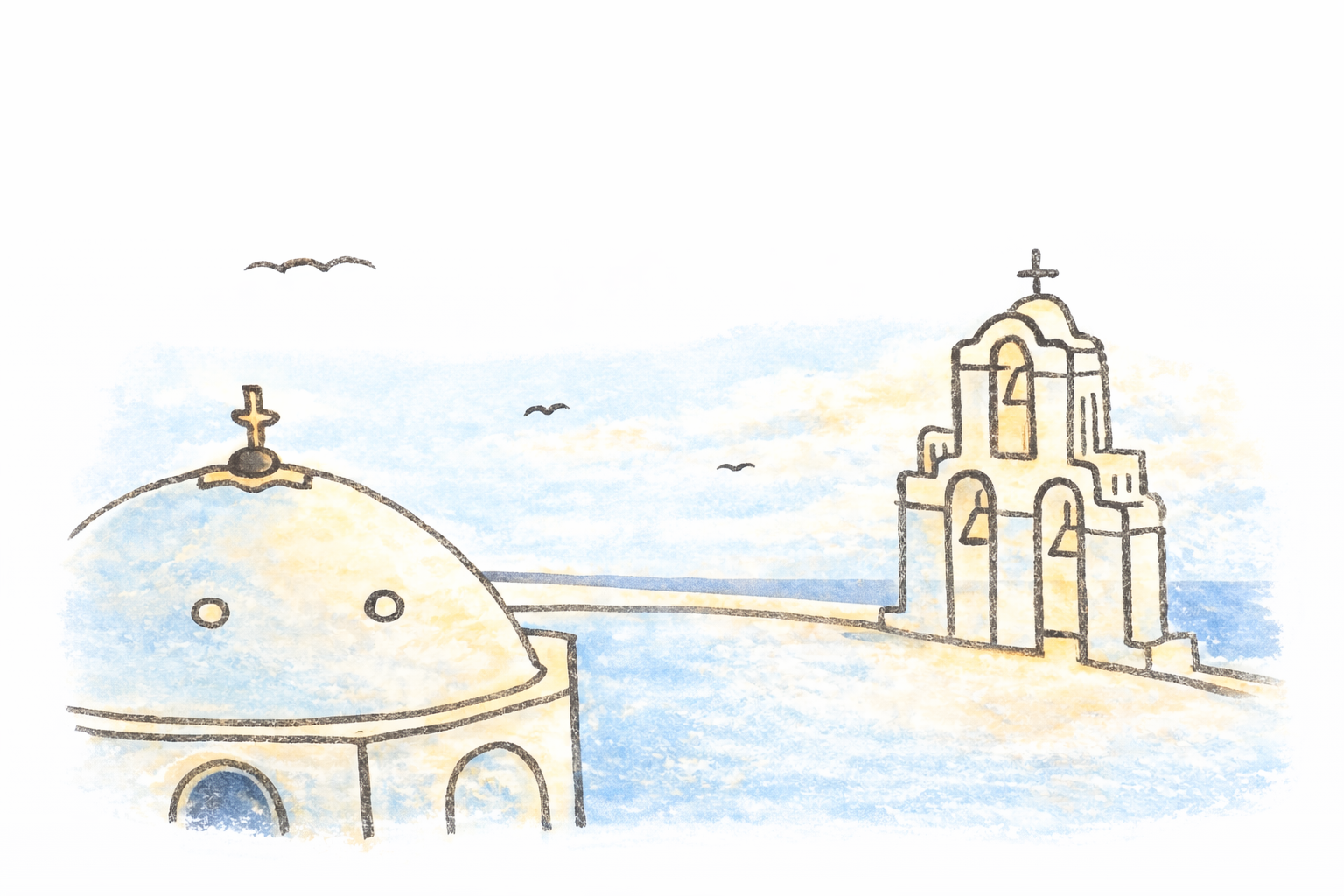
Tradition, Light, and the Joy of Togetherness
Awash with candlelight, fragrant spring air, and centuries-old tradition, Easter in Greece is far more than a holiday. It is the most meaningful celebration of the year, a deeply spiritual journey that unfolds gradually through reflection, ritual, and joyful reunion.
Across villages and towns, the atmosphere begins to shift as Holy Week arrives. Churches fill with solemn hymns and communities gather each evening for services that recount the final days of Christ’s life. The opening days of the week are contemplative and symbolic, inviting believers into a period of spiritual reflection.
Holy Monday recalls the story of Joseph, son of Patriarch Jacob, whose trials mirror the suffering and endurance of Christ. The day also commemorates the parable of the barren fig tree, reminding believers of the importance of cultivating virtue and spiritual growth.
Holy Tuesday is devoted to the Parable of the Ten Virgins, encouraging faith, humility, and readiness of the soul. The service also reflects on the Parable of the Talents, teaching the importance of nurturing one’s gifts and living a life of purpose.
Holy Wednesday commemorates the repentance of Mary Magdalene, who anointed Christ’s feet with myrrh and was forgiven through the strength of her faith. The day carries a strong message of forgiveness and spiritual renewal.
As the week progresses, homes begin to awaken with the aromas and customs of Easter preparation.
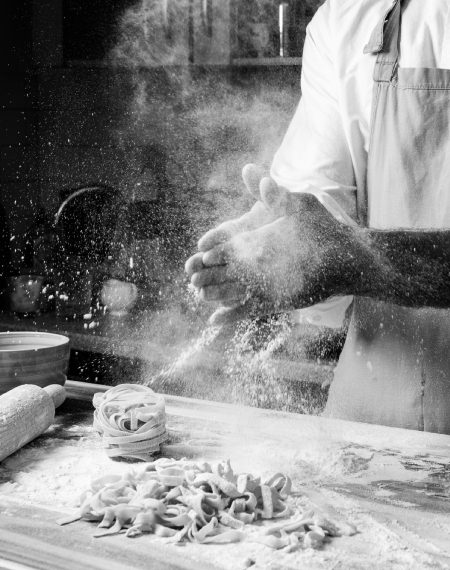
Holy Thursday commemorates the Last Supper, and families begin preparing traditional treats such as koulourakia, delicate butter biscuits braided into elegant shapes. Kitchens also come alive with the joyful ritual of dyeing eggs deep crimson red, a symbol of renewal and the sacred blood of Christ. Children often decorate eggs in vibrant colours, turning the tradition into a playful family moment. That evening, following the church service and the reading of the Twelve Gospels, communities prepare the Epitaphios, the symbolic bier of Christ. Adorned with fresh spring flowers, it is lovingly decorated for the solemn ceremonies of the following day.
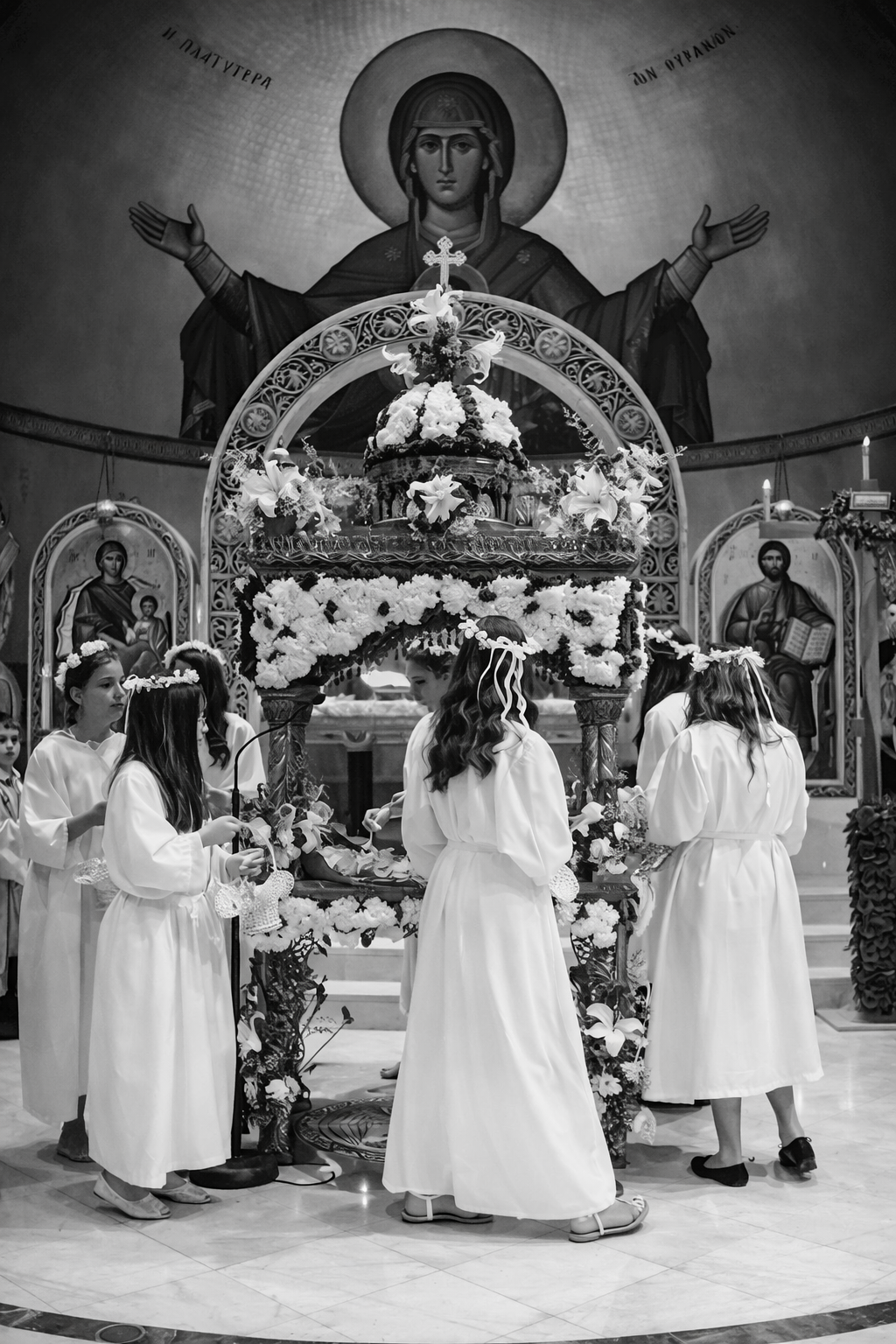
Holy Friday is the most mournful day of the week. During the morning service, the body of Christ is taken down from the Cross. Later in the evening, one of the most moving traditions unfolds as the flower-covered Epitaphios is carried through village streets in a candlelit procession. Young girls dressed in white, known as Myrrhophores, scatter rose petals along the path while the faithful follow quietly with candles in hand. Upon returning to the church, worshippers pass beneath the Epitaphios to receive its blessing.
Then comes the most anticipated moment of all.
On the night of Holy Saturday, families gather at church holding their Easter candles, known as lambades, often gifted to children by their godparents. As midnight approaches, anticipation fills the air and the hymns soften into reverent whispers. Suddenly, the priest emerges carrying the Holy Light, inviting the faithful to “come receive the light.” One by one, candles are lit as the flame passes gently from person to person until the entire congregation glows in golden light. Church bells ring, fireworks brighten the night sky, and the quiet reverence transforms into joyful celebration.
Families return home carrying the Holy Light, carefully protecting the flame as a blessing for their household. Around the table, the beloved ritual of red egg cracking begins, a playful tradition where participants tap eggs while exchanging the joyful greeting:
“Christ has risen!”
“Truly, He has risen!”
Soon after, the family gathers for the traditional midnight meal, often beginning with mageiritsa, a comforting soup that marks the end of the Lenten fast.

The following day brings the true spirit of Greek Easter to life. Easter Sunday is a celebration of family above all else. Across the country, families return to their ancestral villages, where generations gather outdoors around long tables and open fires. Lamb slowly roasts on the spit, festive dishes fill the table, and the air carries the sounds of Greek folk music, laughter, and celebration. Traditional Easter delicacies such as kokoretsi, seasoned lamb offal wrapped in intestines and roasted on the spit, are prepared alongside many other festive dishes. The day unfolds slowly with abundant food, wine, dancing, and storytelling, as families savour the joy of being reunited.
Even the following day continues in the same gentle spirit. Easter Monday is a relaxed national holiday when families enjoy the delicious leftovers from the Easter feast and continue visiting with relatives and friends.
For travellers fortunate enough to experience it, Greek Easter is not simply observed, it is deeply felt. It is a celebration where ancient traditions illuminate villages, families reunite across generations, and the arrival of spring is welcomed with light, warmth, and joy.

At ThinkVilla, we warmly invite you to experience this extraordinary celebration firsthand. Spend Greek Easter Week in the comfort of your private villa, where authentic traditions, local festivities, and the beauty of springtime in Greece come together in unforgettable ways. From candlelit village processions to long Easter Sunday feasts shared with loved ones, it is a moment to slow down, reconnect, and immerse yourself in one of Greece’s most cherished cultural experiences.
Our guest journey team will be delighted to help you plan your Greek Easter Escape, that allow you to fully embrace the spirit of the season.